We have been delving deep into the world of Eric Carle books! The vibrant illustrations and simple, rhythmic, repetitive text characteristic of his stories naturally invite children to participate, making these books ideal for building a strong foundation for early literacy skills such as sequencing, prediction, and expressive language.
We began our book study by reading Polar Bear, Polar Bear, What Do You Hear? The children were immediately drawn to the engaging animal sounds and predictable pattern of the story. After reading, they helped retell the story using felt board pieces, strengthening both comprehension and recall. We extended this experience by adding the story’s animals to our sand table, where the children had the opportunity to act out the story independently and collaboratively. This type of dramatic play supports imagination, social interaction, and reinforces story structure.
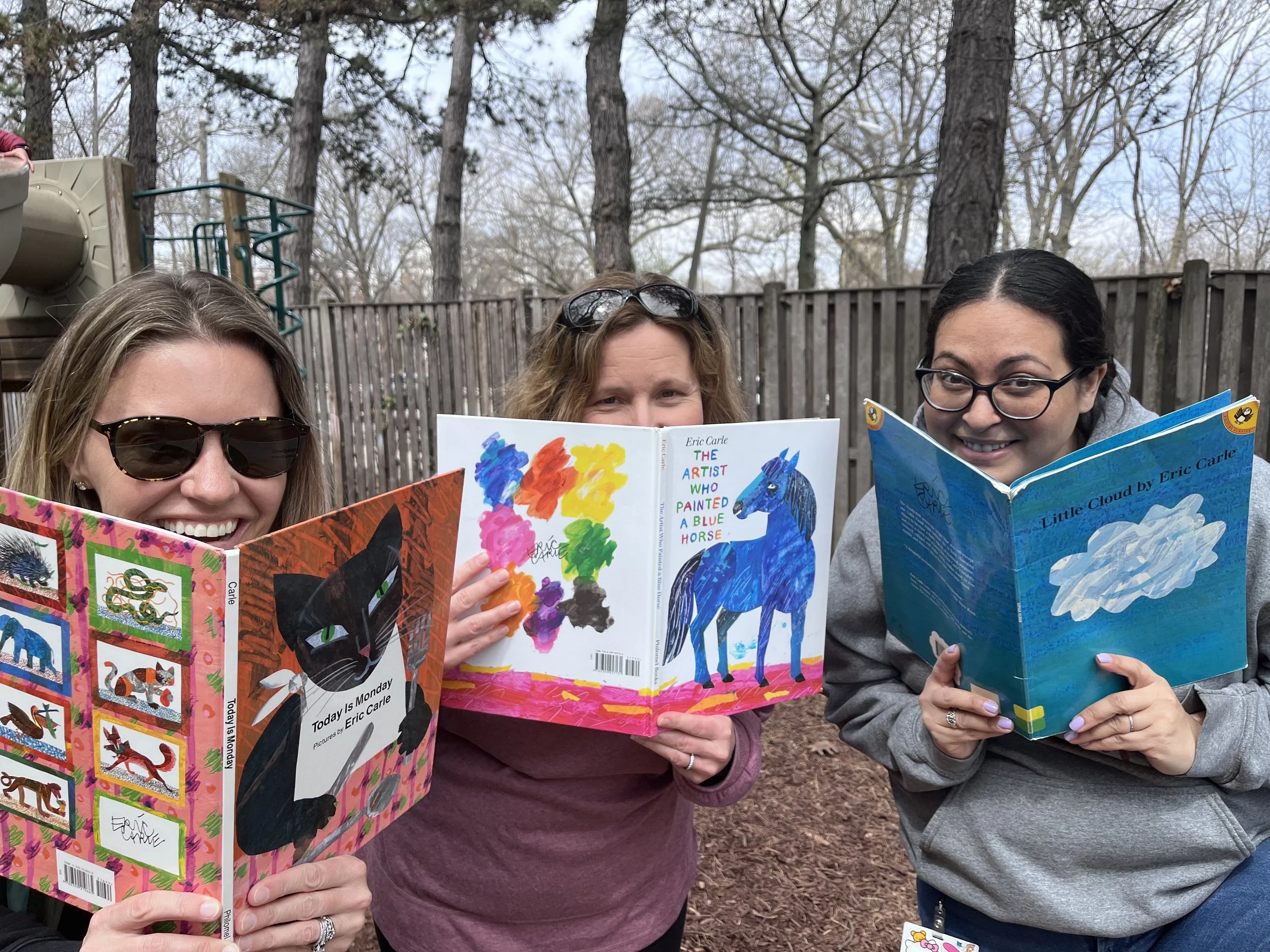
Next, we read Today Is Monday, followed by a hands-on collage activity featuring the foods from the story. As the children worked, many eagerly shared which foods they enjoy eating, with ice cream being a clear favorite! Some children even began reciting lines from the story, proudly calling out phrases such as “Tuesday, spaghetti!” Through this activity, the children expressed their creativity while also strengthening memory, sequencing, and language skills as they revisited the rhythm and repetition of the text.
Our next story, Little Cloud, inspired a sensory-rich, process-based art activity. The children created “raining cloud” artwork by gluing cotton balls onto paper to form clouds. Using pipettes and liquid watercolors, they carefully squeezed drops of color to create rain falling from their clouds. This activity provided valuable fine motor practice while also introducing early science concepts such as cause and effect, as the children observed how the colors moved and blended on the paper. Each piece of artwork was unique, encouraging creativity and self-expression.
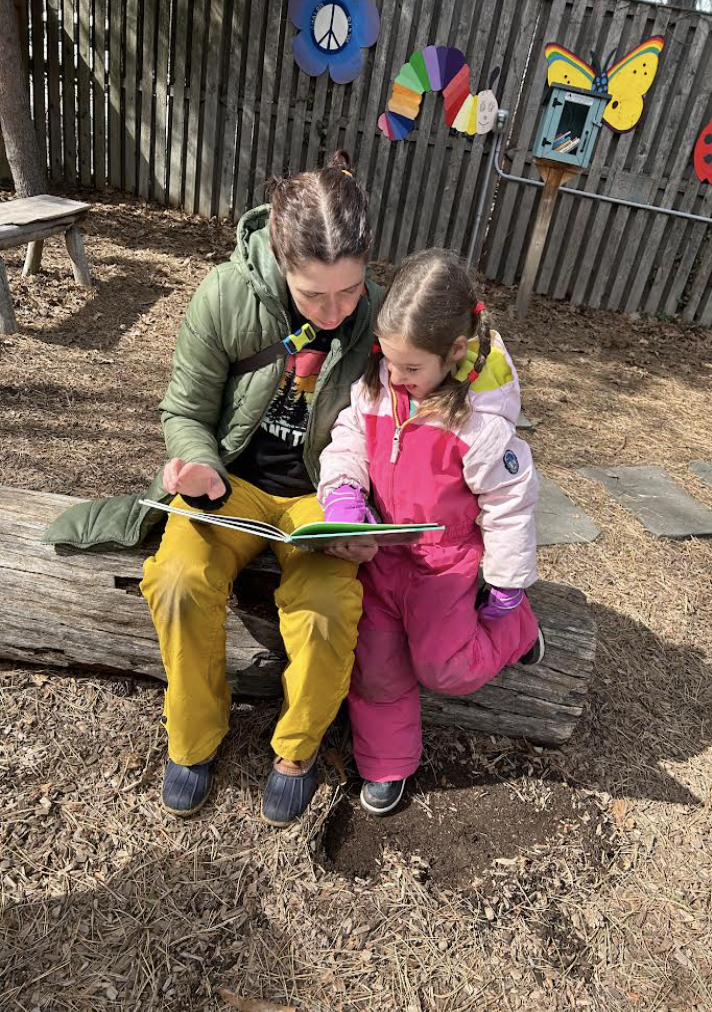
We extended our exploration of Little Cloud with a story walk in our outdoor classroom. Using story puppets, the children matched characters and images to the pages of the book, combining movement, visual recognition, and storytelling in an engaging outdoor setting.
We also revisited the familiar and well-loved Brown Bear, Brown Bear, What Do You See? After reading it together, the children confidently retold the story with great enthusiasm. As an extension, they were invited to create brown texture art, using a variety of materials to mimic Eric Carle’s distinctive illustration style. This activity encouraged sensory exploration while deepening their appreciation for artistic techniques.
We explored The Artist Who Painted a Blue Horse by first reading the story as a class and then using character illustrations to retell it together. The children were actively involved in preparing the materials by tearing tissue paper into smaller pieces and helping to mix paint and glue. They were eager to begin creating their own artwork inspired by the story, and several children chose to create multiple pieces. This experience fostered creativity, independence, and pride in their work.
We look forward to continuing our journey with Eric Carle’s stories and related extension activities. In the coming weeks, we plan to read The Very Hungry Caterpillar as we observe the life cycle of caterpillars transforming into butterflies in our classroom. We will also incorporate caterpillar and butterfly-themed movements and activities into our weekly yoga sessions, further connecting literature with hands-on learning and physical development.
The Artist Who Painted a Blue Horse By Eric Carle
Brown Bear, Brown Bear, What Do You See? By Eric Carle
Little Cloud By Eric Carle
Polar Bear, Polar Bear, What Do You Hear? By Eric Carle
Today Is Monday By Eric Carle
The Very Hungry Caterpillar By Eric Carle